
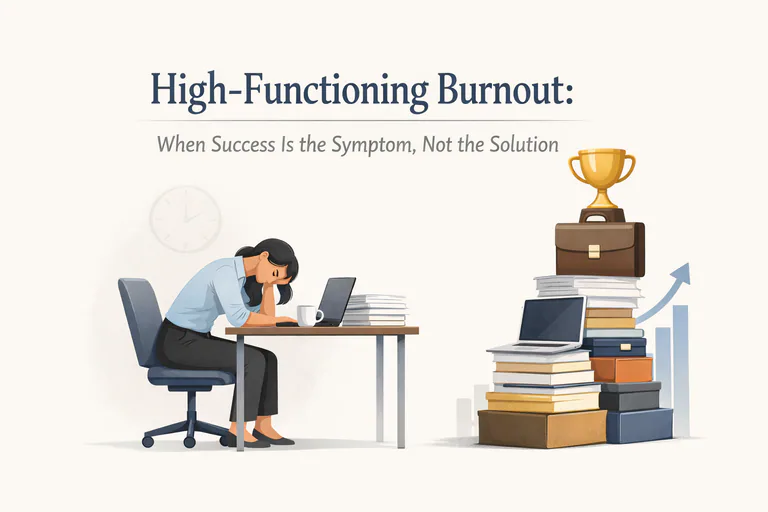
People sometimes use the phrase "high-functioning burnout" to describe feeling exhausted, detached, or overwhelmed while still meeting responsibilities at work or home. Burnout is not a psychiatric diagnosis. Similar experiences can also occur with depression, anxiety, sleep disorders, substance use, medication effects, or medical conditions.
Common experiences associated with burnout
- Persistent physical or emotional exhaustion
- Difficulty recovering after time away from work
- Irritability, reduced patience, or feeling emotionally detached
- Problems with concentration, motivation, or sleep
- Relying more heavily on alcohol, stimulants, or other substances to cope
- Continuing to perform while feeling increasingly depleted
Burnout, depression, and anxiety can overlap
Burnout is usually discussed in relation to ongoing workplace stress. Depression and anxiety can affect many areas of life and may continue even when work demands change. The symptoms can overlap, so a website checklist cannot determine the cause or provide a diagnosis.
A psychiatric evaluation may be helpful when symptoms are persistent, affect sleep or relationships, reduce daily functioning, or are accompanied by hopelessness, panic, unsafe substance use, or thoughts of self-harm.
What a psychiatric evaluation considers
Dr. Brian Villa MD reviews current concerns, work and family context, sleep, medical and psychiatric history, medications, substance use, safety, and prior treatment. The goal is to understand whether symptoms appear related to stress, a psychiatric condition, a medical issue, or more than one factor.
Possible next steps
Recommendations depend on the individual evaluation. They may include changes in workload or routines, sleep and stress-management strategies, talk therapy, medication discussion, coordination with another clinician, or referral for specialized care.
Practical steps that may help
Short-term changes cannot resolve every source of chronic stress, but they can help clarify what is contributing to the problem. Consider tracking sleep, workload, mood, substance use, and physical symptoms for one or two weeks. Protect regular meals and sleep time, identify responsibilities that can be postponed or shared, and discuss persistent symptoms with a qualified healthcare professional.
Seek an evaluation instead of assuming burnout is the only explanation when exhaustion continues during time away from work, affects several parts of life, or occurs with persistent sadness, loss of interest, panic, major sleep changes, unsafe substance use, or declining functioning.
When to seek urgent help
If you are experiencing thoughts of suicide or self-harm, severe intoxication, inability to care for yourself, or another medical or psychiatric emergency, call 911 or go to the nearest emergency room. For emotional distress or suicidal crisis, call or text 988.