
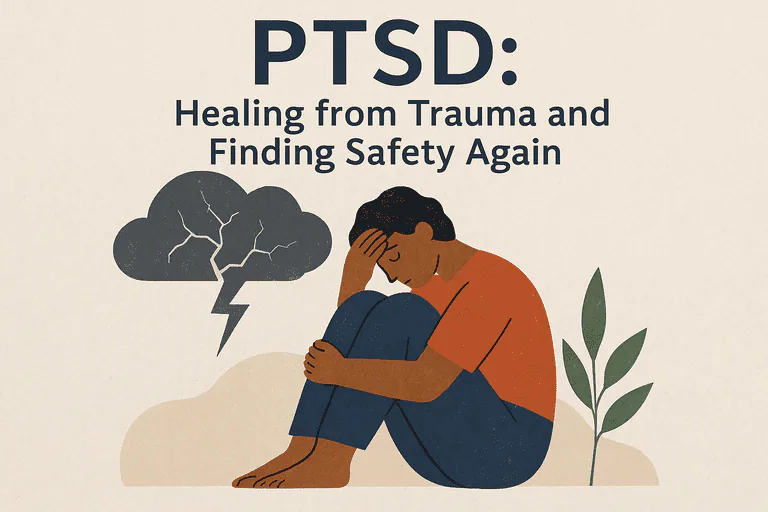
People can react to trauma in different ways. Some reactions improve with time and support; others persist or interfere with daily life. Experiencing trauma does not automatically mean someone has PTSD. A clinical assessment considers the event or events, symptoms, duration, functioning, safety, and other possible explanations.
Symptoms worth discussing
PTSD symptoms can include unwanted memories or nightmares, avoidance of reminders, changes in mood or beliefs, and feeling persistently alert or easily startled. Sleep and concentration may be affected. Depression, anxiety, substance use, pain, or other health concerns can occur alongside trauma symptoms. The NIMH PTSD overview explains why assessment matters.
It can help to describe how the problem affects daily life: avoiding a particular journey, struggling to sleep, feeling detached from other people, or finding ordinary reminders overwhelming. These examples do not establish a diagnosis on their own.
What an evaluation may involve
The clinician may ask about current symptoms, previous treatment, medical history, medications, substance use, sleep, supports, and present safety. Tell the clinician if a question feels overwhelming or if you need to pause. An initial appointment can begin with what is happening now and what you need help with.
Questions to bring include: What might explain these symptoms? Is more assessment needed? Which options fit my situation? What would treatment involve, and who would provide it?
Treatment choices
Trauma-focused psychotherapies are important treatment options for PTSD. Examples include cognitive processing therapy, prolonged exposure, and EMDR. Medication may also be considered. These are distinct treatments requiring appropriate assessment and training; the choice should reflect clinical needs and patient preference. The VA's PTSD treatment guide describes the options.
Ask about the purpose of the recommended approach, how sessions are structured, how symptoms and functioning will be reviewed, and what to do if distress increases. There is no need to interpret emotional intensity as evidence that treatment is working.
Psychiatric care and specialist coordination
Renova Health provides psychiatric evaluation, medication management when appropriate, and supportive psychotherapy. When specialized trauma-focused treatment is indicated, Renova Health can discuss coordination with or referral to a trained clinician. This allows psychiatric care and specialist therapy to address different parts of the plan.
Learn about PTSD care in Miami, complex trauma and PTSD, or request an appointment.
This article is educational and cannot diagnose PTSD. Seek urgent assessment for severe deterioration, and use emergency services if you are in immediate danger or cannot remain safe.