
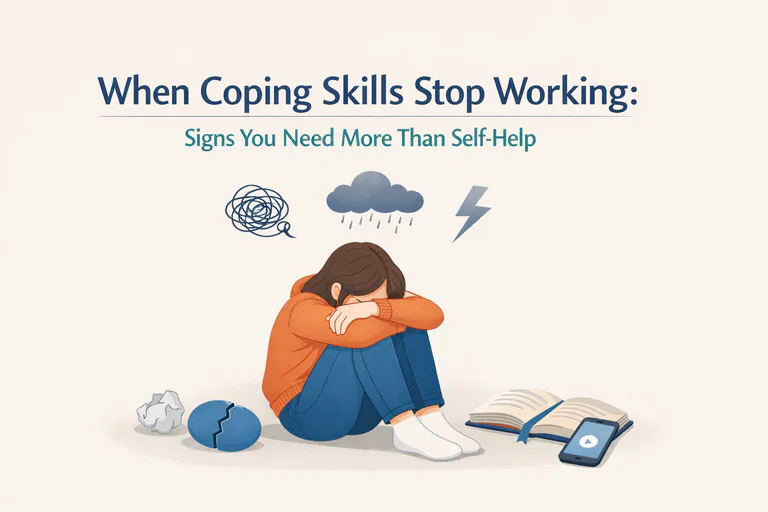
Coping skills can reduce distress, create a pause, or help someone get through a difficult moment. If a strategy no longer feels effective, that does not mean the person has failed or that professional treatment is automatically required. It may mean the stressor has changed, symptoms have intensified, the strategy is not a good fit, or another health or mental-health concern deserves attention.
Why a coping strategy may stop helping
No single technique works for every person or every situation. Sleep loss, chronic stress, grief, relationship conflict, substance use, medication effects, medical conditions, anxiety, depression, trauma-related symptoms, and other factors can change how someone responds. A strategy that is useful for mild distress may be insufficient during a more severe or persistent episode.
What to do next
- Notice which symptoms, situations, or times of day are hardest.
- Review basic contributors such as sleep, substances, medications, pain, and medical changes.
- Use coping tools for their intended purpose: short-term regulation, not as proof that symptoms should disappear.
- Consider a professional evaluation when distress persists, functioning declines, or safety becomes a concern.
What an evaluation can clarify
A psychiatric evaluation reviews symptoms, medical and psychiatric history, medications, sleep, daily functioning, prior treatment, developmental context, and personal goals. Recommendations may include education, psychotherapy, medication discussion, coordination with another clinician, lifestyle support, or referral to a different specialty or level of care. Treatment is individualized; no single path is appropriate for everyone.
Learn more about psychiatric evaluations in Miami and services at Renova Health.
When to seek urgent help
Call 911 or go to the nearest emergency department for an immediate medical or psychiatric emergency. For emotional distress or suicidal crisis in the United States, call or text 988.