
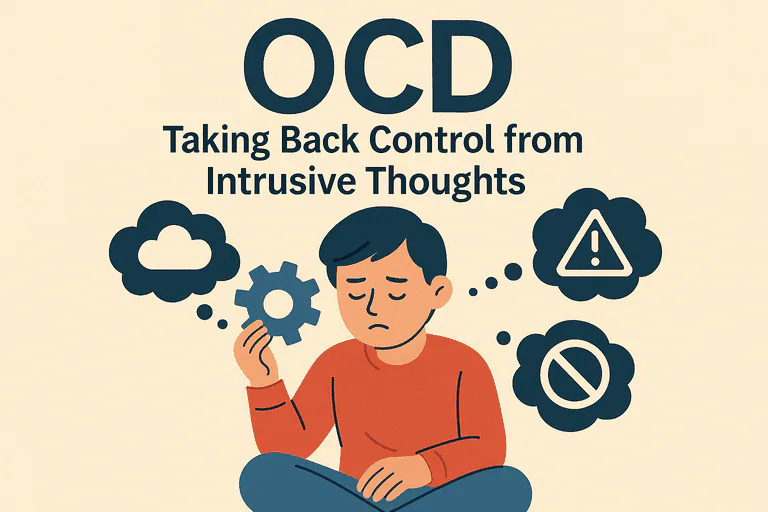
Obsessive-compulsive disorder, or OCD, can involve obsessions, compulsions, or both. Obsessions are recurring intrusive thoughts, images, or urges; compulsions are repetitive behaviors or mental acts. Enjoying order or checking something occasionally does not by itself establish OCD. An assessment considers distress, time spent, interference with daily life, and other possible explanations.
Compulsions can be mental as well as visible.
Visible rituals may include washing, checking, arranging, or repeating actions. Less visible responses can include counting, reviewing memories, silently repeating phrases, or repeatedly seeking reassurance. Obsessions may concern contamination, harm, mistakes, morality, relationships, religion, or other themes.
The subject of a thought alone cannot establish a diagnosis or determine risk. A clinician considers whether thoughts are unwanted, how the person responds, and whether intent, planning, psychosis, or other safety concerns are present.
What to discuss at an OCD evaluation
Try to describe the sequence: what brings on distress, what you fear might happen, what you do to get relief, and how long that relief lasts. You can tell the clinician that a topic feels difficult to discuss without providing every detail immediately.
- How much time is lost to rituals, reassurance, or avoidance?
- Which activities, relationships, or responsibilities are affected?
- Are there rituals other people do not see?
- What previous treatments were tried, and what changed?
Bring relevant records and a current medication list if available. The evaluation may also consider anxiety, mood symptoms, tics, developmental differences, medical conditions, and substance or medication effects.
Treatment options
Exposure and response prevention (ERP) is a form of cognitive behavioral therapy used to treat OCD. It involves working with feared situations or experiences while reducing compulsive responses. Medication may also be considered. Selection depends on the person, clinical needs, prior response, risks, and preferences. The NIMH OCD guide explains these approaches.
Ask who will provide each part of treatment, what training they have, how progress will be reviewed, and how clinicians will coordinate. Do not change medication or undertake a difficult exposure exercise solely on the basis of an online article.
What Renova Health provides
Renova Health offers psychiatric evaluation, treatment planning, and medication management when appropriate. Renova Health can coordinate with or refer to an ERP-trained therapist. Supportive psychotherapy within psychiatric care is distinct from a structured course of specialist ERP.
Visit OCD care in Miami for the practice's service information, review psychiatric evaluations, or request an appointment.
This article provides general education. If there is immediate danger, intent to cause harm, or an inability to remain safe, seek emergency assessment.