
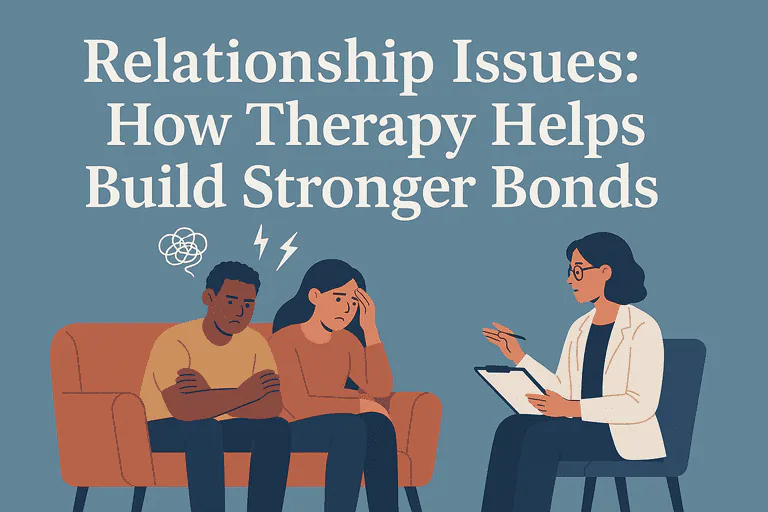
Relationship stress can affect sleep, concentration, mood, and daily life. It may occur alongside a mental-health condition, arise from a difficult situation, or involve both. An assessment should leave room for these different possibilities rather than assuming that conflict proves a diagnosis or that one person is responsible for every difficulty.
What kind of help are you seeking?
You might want support with your own anxiety or mood, help deciding how to respond to recurring conflict, or a structured conversation with a partner. These goals can lead to different types of care.
Individual psychiatric care and couples therapy have different purposes. Psychiatric evaluation focuses on an individual's symptoms, history, functioning, and treatment needs. Couples therapy addresses concerns within the relationship with a clinician trained to work in that format. A partner may sometimes participate in psychiatric care with permission, but that does not make the appointment a couples-therapy session.
Questions that can clarify the next step
- What has changed, and how is it affecting everyday life?
- Are there persistent symptoms even when the relationship is less stressful?
- Do you want individual support, joint sessions, or guidance on finding a specialist?
- Are sleep, substances, health changes, caregiving, or financial pressures part of the situation?
- Can everyone speak freely and safely?
If there are threats, intimidation, violence, or fear of consequences for speaking openly, discuss safety privately with a qualified professional. Do not assume a joint appointment is the appropriate first step. Use emergency services for immediate danger.
Choose a provider for the work you want to do
Ask the clinician what services they offer, who would be considered the patient, what their relevant training is, and how confidentiality and costs are handled. Explain any existing individual therapy or psychiatric treatment so the roles can be clarified.
It is reasonable to ask how progress will be reviewed. Goals might relate to communication, coping, day-to-day functioning, or an individual symptom. No article or clinician can guarantee a particular relationship outcome.
Preparing for an individual appointment
Bring examples of what is difficult and what you hope to understand. You can discuss your own experiences and responses without diagnosing your partner. Relevant information may include previous care, current medications, medical history, sleep, substance use, and available support.
What Renova Health offers
Renova Health provides psychiatric evaluation, medication management when appropriate, and supportive psychotherapy. When couples or family therapy is the appropriate service, Renova Health can discuss coordination with or referral to an appropriately trained clinician.
Review psychiatric services, family stress and care options, or request an appointment. Confirm that the appointment matches the service you are seeking.
This guide is general education. Further reading: NIMH: Psychotherapies and American Psychological Association: Families.